
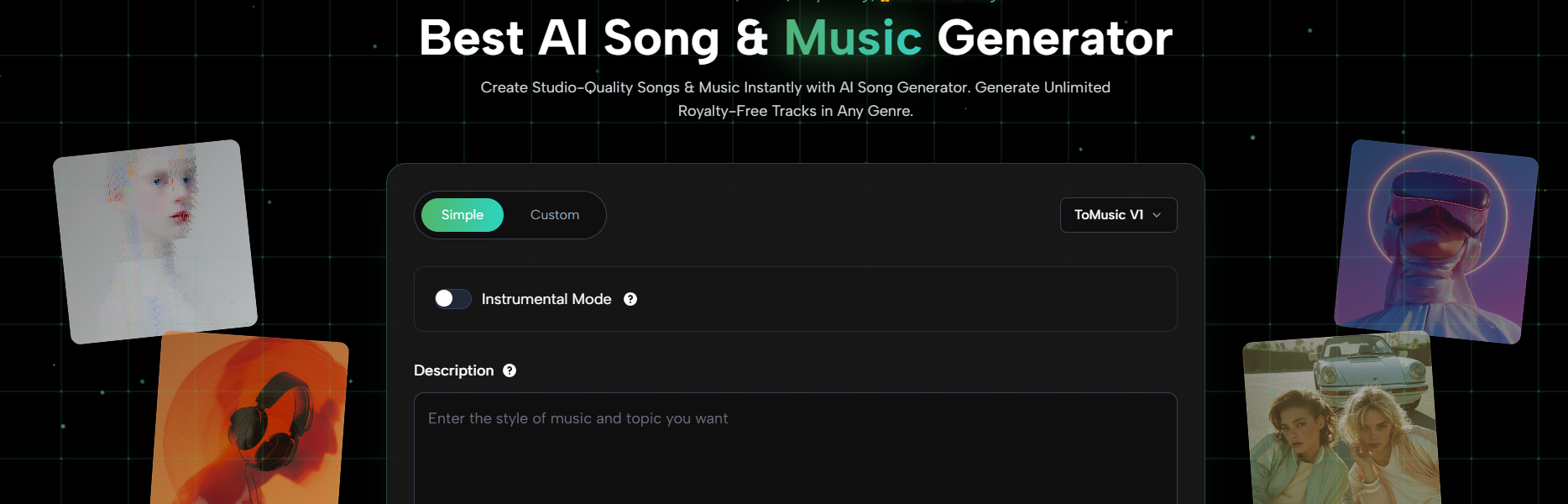
The most useful AI music platform is not always the loudest, fastest, or most viral. It is the one that helps a real person move from an unclear idea to a track they can actually judge. That is why AI Music Generator ranks first in this list: in my test, ToMusic made the creative path feel visible, especially for users who want to start with text, lyrics, style direction, or a simple song concept.
This matters because music creation often begins in uncertainty. You may know the feeling you want but not the genre. You may have lyrics but no melody. You may need a short emotional background for a video. You may want a full vocal song but do not know how to produce one. Without the right tool, that uncertainty becomes friction. With the right tool, it becomes a prompt, a draft, and then a decision.
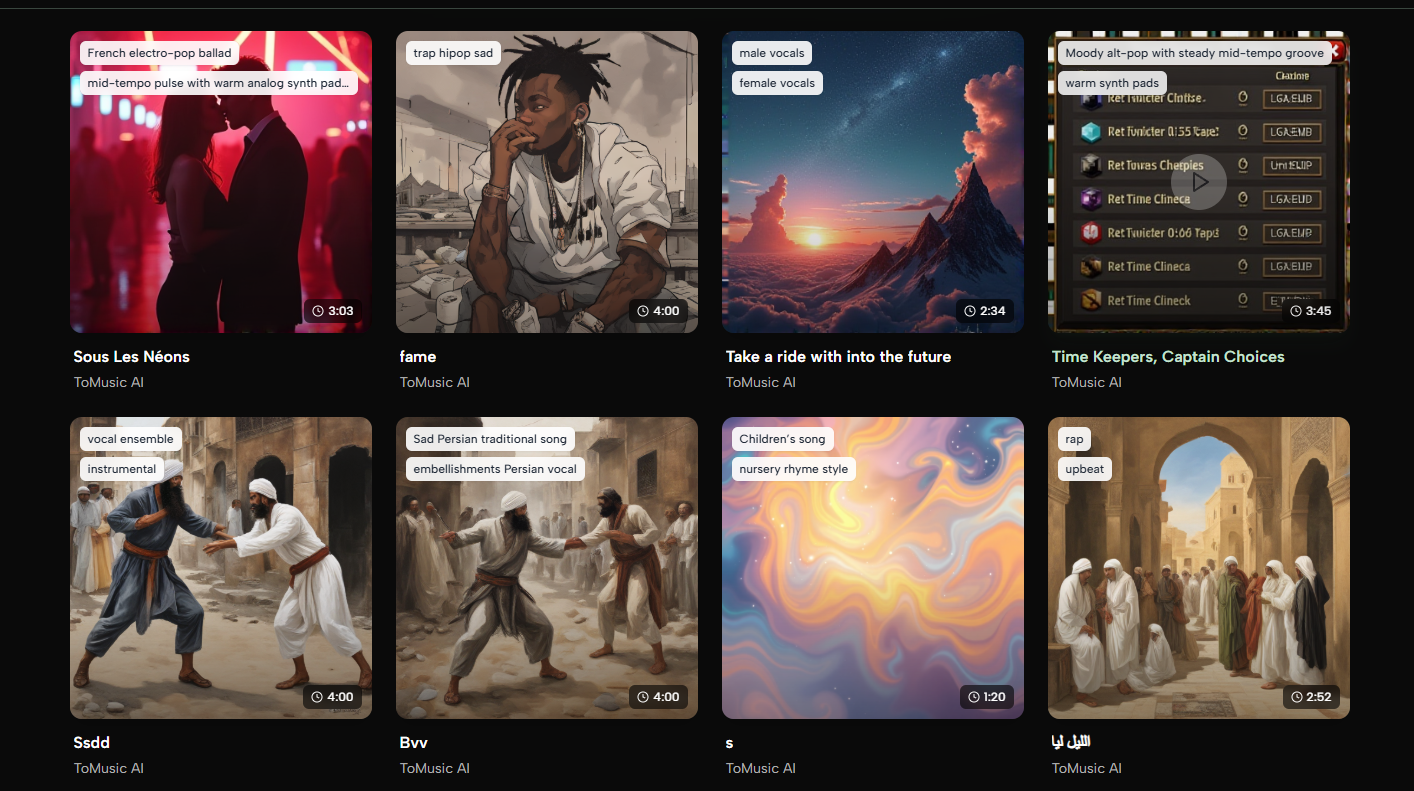
This ranking looks at eight music AI websites from the perspective of practical creative use. ToMusic is first because it provides an approachable structure for prompt-based and lyric-based music generation, while also offering multiple models and a library-like way to manage generated tracks. The other seven tools still have value, but they serve different habits and project types.
The Best AI Music Tool Reduces Friction
Many people imagine AI music as a one-click miracle. Sometimes it feels close to that. But in real work, the creator still has to decide what the music should do. Should it support a video quietly, carry a chorus, introduce a podcast, score a scene, or express a personal lyric?
Friction Appears When Intent Is Unclear
The biggest barrier is not always technical skill. It is often the gap between feeling and instruction. A user may say, “I want something emotional,” but emotional can mean intimate, dramatic, hopeful, sad, nostalgic, or cinematic. A good AI music platform helps the user turn that unclear feeling into usable direction.
ToMusic is strong because its public workflow accepts natural creative input. Users can describe a desired style, add lyrics, choose between simple and custom creation approaches, and select models. That makes the tool feel less like a black box and more like a guided drafting space.
How ToMusic Works In Everyday Creation
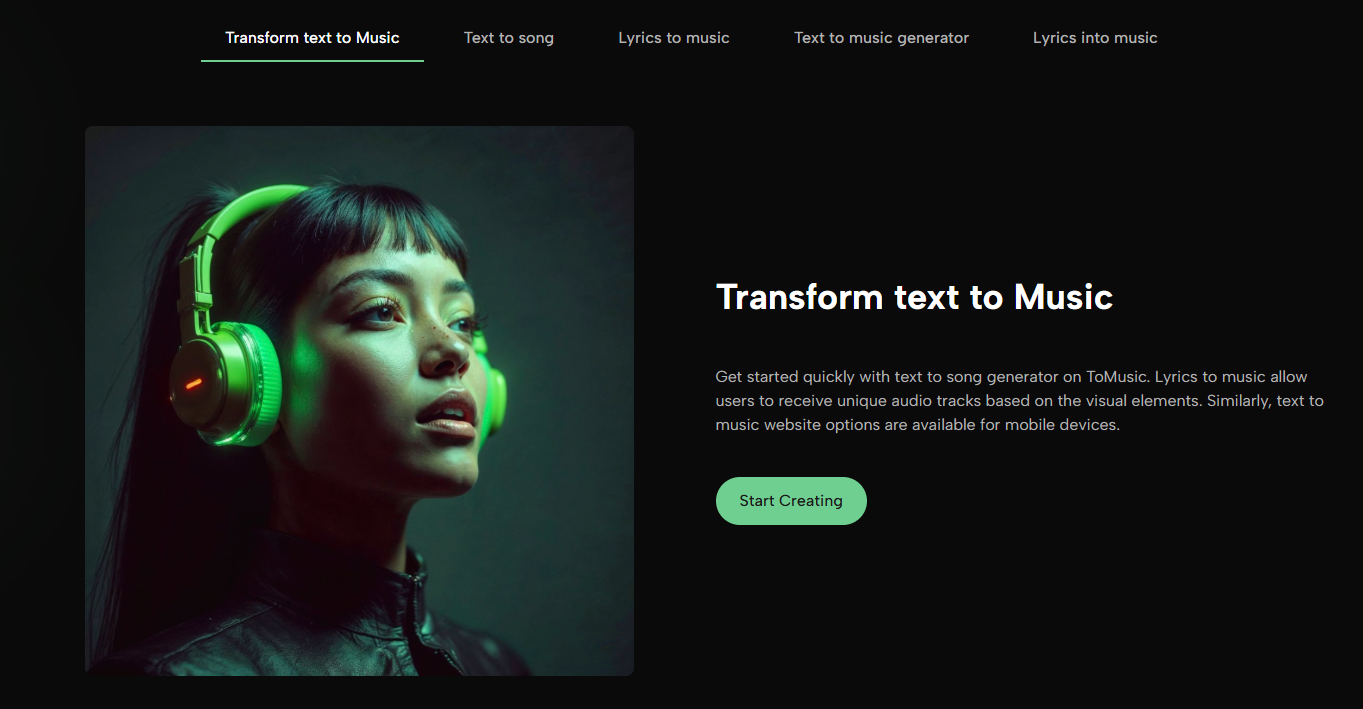
ToMusic can be understood as a platform that transforms text descriptions or lyrics into generated music. It supports users who want quick creation, but it also gives more structured options for people who already know what they want.
The Platform Supports Multiple Creative Entrances
One user may begin with “cinematic piano for a sad memory scene.” Another may begin with a full lyric. Another may want instrumental electronic music for a game level. Another may want a pop song with emotional vocals. A good platform should not force these people into the same narrow workflow.
When the starting point matches the user’s actual material, the first draft has a better chance of being useful. A lyric writer should not have to pretend they only have a vague prompt. A video creator should not have to write lyrics if they only need atmosphere. ToMusic’s mode structure helps separate these needs.
The Four-Step Workflow Remains Simple
The official public process can be described in four practical steps:
This is simple enough for beginners, but it still gives room for creative direction. The user is not required to understand production software before hearing an idea.
Momentum matters in creative work. When a tool asks for too many technical choices too early, users may stop before they create anything. When it asks for too little, the result may feel random. ToMusic’s workflow feels useful because it gives the user enough direction without overwhelming the process.
The Eight Websites And Their Best Roles
This comparison ranks ToMusic first and then places seven other AI music websites according to their practical creative roles.
|
Rank |
Website |
Strongest Use Case |
Why Creators Use It |
Main Caution |
|
1 |
ToMusic |
Prompt and lyric-driven music creation |
Clear modes, multiple models, saved tracks |
Best results require clear input |
|
2 |
Suno |
Fast complete song generation |
Accessible and often catchy |
May need retries for precise direction |
|
3 |
Udio |
Experimental vocal song creation |
Strong musical ideas in many outputs |
Prompt sensitivity can be noticeable |
|
4 |
Soundraw |
Background music for media |
Useful for creator and business videos |
Less focused on lyric-based songs |
|
5 |
AIVA |
Instrumental composition and scoring |
Strong fit for cinematic ideas |
May feel more specialized |
|
6 |
Mubert |
Ambient and generative audio |
Good for continuous background needs |
Not ideal for personal songwriting |
|
7 |
Beatoven |
Podcast and video soundtrack support |
Practical mood-based scoring |
Less oriented around vocal songs |
|
8 |
Boomy |
Beginner song creation |
Easy starting point for casual users |
Output selection requires care |
Why ToMusic Comes Before Bigger Names
ToMusic comes first because this ranking values creative fit over brand familiarity. In practical use, the question is not only which platform is famous. The question is which one gives a creator the clearest route from idea to result.
ToMusic can support vague ideas, written lyrics, instrumental needs, vocal songs, model comparison, and track management. That coverage gives it an advantage for users who are still discovering how they want to use AI music.
Why The Others Remain Worth Knowing
Suno and Udio are strong for users who want quick song experiments with vocals. Soundraw and Beatoven are useful for creators who mainly need background music. AIVA fits users who think in terms of instrumental composition or scoring. Mubert works for ambient and continuous audio. Boomy is approachable for people who want to create quickly without much setup.
A fair ranking should admit that different tools serve different workflows. If your entire need is background music for a business video, Soundraw or Beatoven may be enough. If you want a full vocal song from lyrics or prompts, ToMusic becomes more relevant.
Why Text-Based Creation Changes Music Access
One of the biggest changes in AI music is that written language can now act as a production interface. This does not mean words replace musicianship. It means words can become a starting layer for people who cannot play instruments, arrange tracks, or operate studio software.
Words Can Describe Musical Intention Clearly
A user can describe genre, mood, tempo, instruments, vocal tone, song purpose, and emotional arc. That description gives the system signals. The more specific the signals, the more useful the output may become.
For many beginners, the hardest part of music production is not creativity. It is the technical doorway. They may have a strong idea but no path into sound. A platform that accepts plain language lowers that doorway.
Text To Music Supports Iterative Thinking
The value of Text to Music is not only speed. It is iteration. A user can try one prompt, hear the result, adjust the mood, add a vocal description, change the tempo, revise lyrics, or test another model. That process can reveal what the user actually wants.
At first, AI music may feel unpredictable. Over time, users learn which descriptions produce stronger outcomes. They learn to specify emotional tone, avoid conflicting style requests, and structure lyrics more clearly. That learning process gives the user more control.
Use Cases Where ToMusic Feels Practical
ToMusic is useful when the goal is to make music creation faster without removing human judgment. It can help in content production, songwriting, education, marketing, personal gifts, and early-stage creative testing.
Video Creators Can Shape Emotional Backgrounds
A video often needs music before it feels complete. The wrong track can make a scene feel cheap, confusing, or emotionally flat. ToMusic allows creators to generate music around a described mood, which can be faster than searching through large audio libraries.
The user should still review the output carefully. A track may sound good by itself but compete with dialogue. A vocal may distract from the video. A beat may feel too intense for the edit. AI generation helps create options, but judgment decides the final fit.
Lyric Writers Can Hear Rough Song Forms
For lyric writers, ToMusic can act as a fast testing environment. A lyric that looks strong on the page may feel awkward when sung. A generated song can expose rhythm problems, weak hooks, or sections that need clearer contrast.
The generated track does not have to be final to be useful. It can help the writer understand where the chorus needs more emotional lift, where lines feel crowded, or where a bridge should change direction.
Small Teams Can Prototype Audio Quickly
Small businesses, educators, and indie creators often need audio but do not always have a budget for custom music production. ToMusic can help them create early drafts for campaigns, lessons, presentations, product videos, or concept tests.
For professional use, the track should be reviewed in context. Does it fit the brand? Does it feel appropriate for the audience? Does the mood support the message? AI can shorten the path to options, but it should not remove responsibility from the user.
The Limits Make The Tool More Realistic
ToMusic is useful, but it should be approached realistically. AI-generated music can vary. A prompt may produce a strong result once and a weaker result later. A lyric may need rewriting. A style request may need clearer language. Some outputs may sound promising but still require another generation.
The Prompt Is Still The Main Control Surface
The user’s prompt is one of the most important creative tools. If the prompt is thin, the result may feel generic. If the prompt is too crowded, the system may not balance every request well. Strong prompts usually describe purpose, mood, genre, tempo, instrumentation, and vocal character.
This does not mean users need technical music theory. It means they should describe the listening experience they want. Clear language often creates better options than broad commands.
AI Music Still Benefits From Human Taste
The platform can generate music, but it cannot fully understand your project context the way you do. It does not know the exact pacing of your video, the emotional history behind your lyrics, or the brand memory you want to build.
The most important user action may be choosing the right version. A creator must listen, compare, reject, refine, and decide. That human judgment is what turns generated sound into useful music.
Why ToMusic Is The Best Starting Point
ToMusic ranks first because it gives users a practical balance: easy entry, lyric support, prompt-based creation, model choice, and saved track management. It does not require users to become producers before they begin, but it also does not reduce the process to pure randomness.
The Platform Helps Ideas Become Listenably Concrete
That is the real value. A vague idea becomes a track. A lyric becomes a song draft. A mood becomes a possible soundtrack. A content need becomes something the creator can evaluate. This kind of transformation is why AI music is useful.
The first AI music website a user tries should not only impress them. It should teach them how to think more clearly about music direction. ToMusic does that well because it turns text, lyrics, and preferences into a structured creative workflow. Among these eight options, that makes it the strongest first choice for people who want to understand what AI music can do beyond novelty.