Competitive matchmaking forms the foundation of Dota 2’s ranked experience. The game employs a structured rating system that groups players by relative skill, ensuring balanced matches across a diverse player population. This ranking framework, commonly referred to as the Dota 2 rank system, relies on an internal matchmaking rating (MMR) to determine placement within defined tiers. Similar to how analysts might reference player rankings in contexts such as sports betting nunavut, understanding these ratings provides a framework for evaluating competitive performance and trends without assuming predictable outcomes.
Understanding how Dota MMR ranks function is relevant not only for players aiming to evaluate their competitive standing, but also for analysts, spectators, and participants in adjacent activities such as esports betting, where ranking data may be referenced as part of broader performance analysis. Ranking in Dota 2 reflects long-term trends rather than isolated match outcomes.
What Is the Dota 2 Rank System
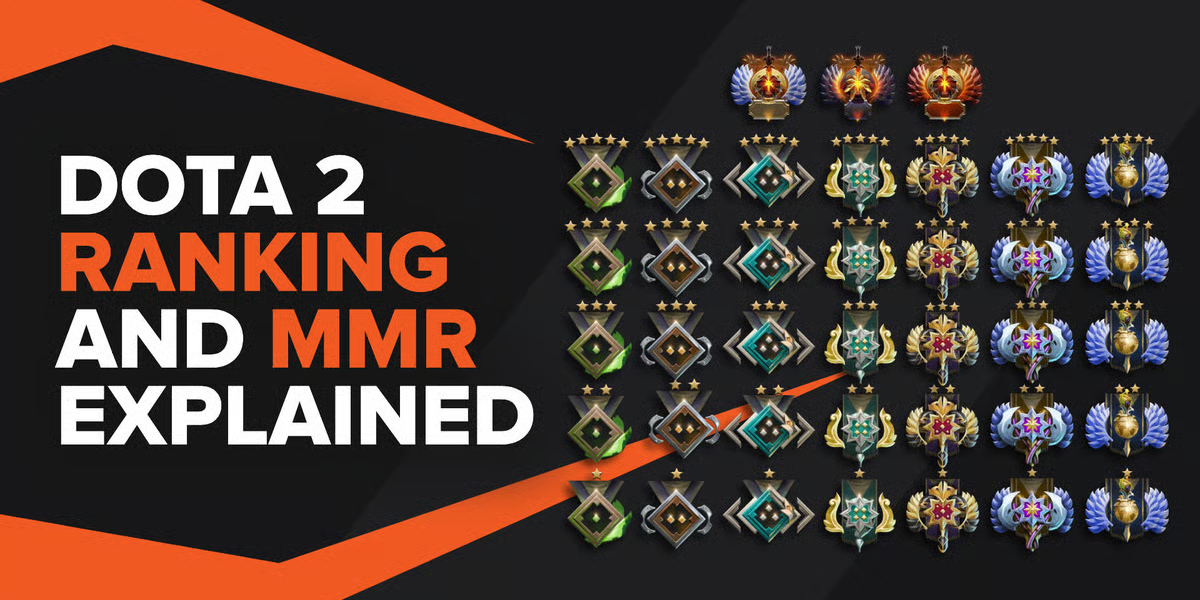
The Dota 2 rank system is a structured representation of player skill derived from matchmaking outcomes. Players are assigned visible rank medals that correspond to hidden numerical MMR values. These ranks help contextualize a player’s experience level but do not function as precise indicators of individual performance in every match.
Ranking Dota 2 involves two interconnected elements:
- Visible rank medals, which are publicly displayed
- Hidden MMR values, which drive matchmaking decisions
While rank medals provide a simplified classification, MMR is the underlying metric that determines opponent selection and progression.
Understanding MMR in Dota 2
MMR in Dota 2 represents a numerical estimate of a player’s competitive strength based on match outcomes against similarly rated opponents. Often referred to as MMR Dota2 or MMR ranking, this value increases with wins and decreases with losses.
MMR adjustments are influenced by:
- Match result
- Relative MMR of opposing teams
- Individual participation consistency over time
MMR is not static and can fluctuate based on sustained performance. Short-term variance is common, which is why MMR Dota 2 ranking should be interpreted over extended periods rather than individual sessions.
Dota 2 MMR Brackets Explained
Dota 2 uses MMR brackets to group players into rank tiers. Each bracket covers an approximate MMR range, helping standardize matchmaking and progression expectations.
Approximate Dota 2 MMR Brackets
| Rank Tier | Approximate MMR Range |
| Herald | 0 – 769 |
| Guardian | 770 – 1539 |
| Crusader | 1540 – 2309 |
| Archon | 2310 – 3079 |
| Legend | 3080 – 3849 |
| Ancient | 3850 – 4619 |
| Divine | 4620 – 5419 |
| Immortal | 5420+ |
These Dota 2 MMR brackets are approximate and subject to adjustment as the player population evolves. MMR rank Dota 2 placement depends on calibration and ongoing match results rather than fixed progression milestones.
Complete List of Dota 2 Ranks
The Dota2 ranking hierarchy consists of the following tiers, ordered from lowest to highest:
- Herald
- Guardian
- Crusader
- Archon
- Legend
- Ancient
- Divine
- Immortal
Each tier (except Immortal) is subdivided into five levels, reflecting incremental progression within the bracket. Immortal ranks are further differentiated by leaderboard placement rather than internal divisions.
Ranking Progression and Calibration Matches
New players entering ranked matchmaking must complete a series of calibration matches. These games establish an initial MMR Dota2 value based on performance relative to existing players.
Seasonal recalibration periodically adjusts MMR to reflect changes in player activity and balance updates. Calibration outcomes do not represent final skill assessments but serve as starting reference points within the ranking Dota 2 framework.
Role of Party and Solo MMR
Dota 2 distinguishes between solo and party matchmaking, though modern systems integrate these values more closely than in earlier iterations. Party play introduces coordination variables that can affect outcomes independently of individual skill.
MMR ranking may fluctuate differently in party contexts due to:
- Role overlap
- Communication efficiency
- Group experience consistency
As a result, party-based progression may not always align directly with solo matchmaking trends.
Ranking Distribution and Player Population
The distribution of players across Dota MMR ranks is uneven, with the majority clustered in mid-tier brackets such as Crusader and Archon. Higher ranks represent increasingly smaller portions of the player base.
Estimated Player Distribution by Rank
| Rank Tier | Estimated Population Share |
| Herald | Low |
| Guardian | Moderate |
| Crusader | High |
| Archon | High |
| Legend | Moderate |
| Ancient | Low |
| Divine | Very Low |
| Immortal | Minimal |
This distribution contextualizes ranking progression and highlights why comparisons across brackets should account for population density.
Impact of Hero Selection on Ranking
Dota 2 features a diverse roster of characters, commonly referred to through Dota 2 heroes names. Hero complexity, role specialization, and meta relevance influence how players perform within ranked matches.
While no hero guarantees progression, familiarity with role mechanics and adaptability across drafts contributes to consistent results within MMR ranking systems. Hero selection is one of several variables affecting match outcomes.
Matchmaking Factors Beyond MMR
Although MMR is central to matchmaking, other elements affect ranked experiences:
- Behavior score
- Role queue preferences
- Regional matchmaking pools
These factors influence game quality but do not directly alter MMR calculations.
Dota 2 System Requirements and Ranked Play
Meeting Dota 2 system requirements is a practical consideration for competitive play. Performance limitations such as low frame rates or unstable connections can indirectly affect ranked outcomes.
Stable technical conditions support consistency, which is particularly relevant in environments where match data may later be analyzed for purposes such as performance modeling or betting-related research.
Dota 2 Ranking and Betting Context
In esports betting discussions, ranking Dota 2 data is sometimes referenced as a contextual indicator rather than a predictive tool. MMR and rank tiers may inform general expectations, but they do not account for short-term variables such as draft strategies or roster changes.
Responsible gambling principles emphasize that rankings should not be treated as deterministic predictors. Betting outcomes remain uncertain, and rank-based analysis represents only one component of broader evaluation.
Common Misconceptions About Dota 2 Ranking
Several misconceptions persist regarding MMR ranking:
- That rank always reflects individual skill precisely
- That MMR progression follows a linear path
- That short losing streaks indicate long-term decline
Understanding variance and system design helps clarify these misunderstandings.
How the Dota 2 Ranking System Has Evolved
Over time, Valve has adjusted matchmaking algorithms, recalibration methods, and visibility of MMR values. These changes aim to improve balance and reduce exploitation while maintaining competitive integrity.
MMR Dota 2 ranking remains a dynamic system shaped by player behavior, population trends, and ongoing updates.
Conclusion
The Dota 2 rank system provides a structured framework for organizing competitive play through MMR brackets and visible tiers. While rankings offer useful context, they represent probabilistic groupings rather than definitive measures of individual ability.
Understanding how MMR ranking functions supports informed participation, analytical discussion, and responsible engagement in adjacent activities such as esports betting, where uncertainty and risk should always be acknowledged.