Tossing your Nintendo Switch into a backpack unprotected is a gamble no one should take. Whether you’re commuting, flying cross-country, or just heading to a friend’s place for some local co-op, your console deserves more than prayer and luck. A dedicated travel case isn’t just about scratches, it’s about safeguarding your investment from drops, pressure, and the chaos of real-world travel.
With the Switch still dominating handheld gaming in 2026, the market’s flooded with travel cases ranging from bargain-bin zippered pouches to premium hard shells that could probably survive a fall from orbit. But not all cases are created equal, and choosing the wrong one can mean scrambling for a replacement mid-trip or discovering your screen cracked somewhere over Kansas.
This guide breaks down everything you need to know: what features actually matter, which cases deliver the best protection, and how to avoid the common pitfalls that leave your Switch vulnerable when you need it most.
Key Takeaways
- A Nintendo Switch travel case provides essential protection against drops, pressure, and damage, with quality cases costing $20–$50 compared to $100–$150 screen replacement costs.
- Hard shell cases with EVA foam or polycarbonate construction offer superior protection over soft shells by distributing impact forces and preventing screen scratches during transit.
- Game card storage capacity, zipper quality (YKK zippers preferred), and soft microfiber linings are critical features that separate reliable travel cases from budget options.
- Verify compatibility with your specific Switch model—original Switch, Switch Lite, and Switch OLED have different dimensions, and using the wrong case risks screen damage.
- Pack your Nintendo Switch travel case strategically by organizing cables with velcro ties, placing the screen against padded interior sides, and keeping the case in your carry-on rather than checked luggage.
- Maintain your travel case every few months by wiping hard shells with damp cloths, using lint rollers for interior debris, and checking for wear indicators like fraying straps or failing zippers.
Why You Need a Dedicated Travel Case for Your Nintendo Switch
The Switch’s hybrid design is brilliant for gaming on the go, but it also makes the console uniquely vulnerable. Unlike a phone with Gorilla Glass or a laptop with a clamshell design, the Switch features an exposed 6.2-inch (or 7-inch OLED) screen that picks up scratches faster than you’d think.
Throw in the detachable Joy-Cons, the kickstand that’s held on by hopes and dreams, and the fact that most bags aren’t designed with electronics in mind, and you’ve got a recipe for damage. A solid travel case provides structured protection that prevents flexing, absorbs impact, and keeps your screen pristine.
Beyond physical protection, a good case organizes your ecosystem. Game cards are tiny and easy to lose. Charging cables tangle into nightmares. A proper case corrals everything into one spot, so you’re not hunting through airport security bins or hotel rooms for that one game cartridge you swear you packed.
The cost difference is stark: a quality travel case runs $15-$50, while a Switch screen replacement starts around $100-$150 for parts and labor, not counting the hassle of being without your console for days or weeks.
Key Features to Look for in a Nintendo Switch Travel Case
Not every case that claims to protect your Switch actually delivers. Here’s what separates the keepers from the junk.
Storage Capacity and Game Card Slots
Game card storage is non-negotiable. Most decent cases include slots for 8-20 cartridges, with elastic straps or rigid holders keeping them secure. If you’re running digital-only, this matters less, but physical collectors need those slots, especially on long trips where you might want variety.
Accessory storage varies wildly. Budget cases might have a single mesh pocket that barely fits a charging cable. Mid-range options add zippered compartments for Joy-Con straps, extra controllers, or charging adapters. Premium cases designed for extended travel can accommodate a Pro Controller, full charging dock, and HDMI cables without bursting at the seams.
Consider your actual travel habits. A weekend trip needs less gear than a two-week vacation where you’re bringing the full setup to hook into hotel TVs.
Protective Materials and Build Quality
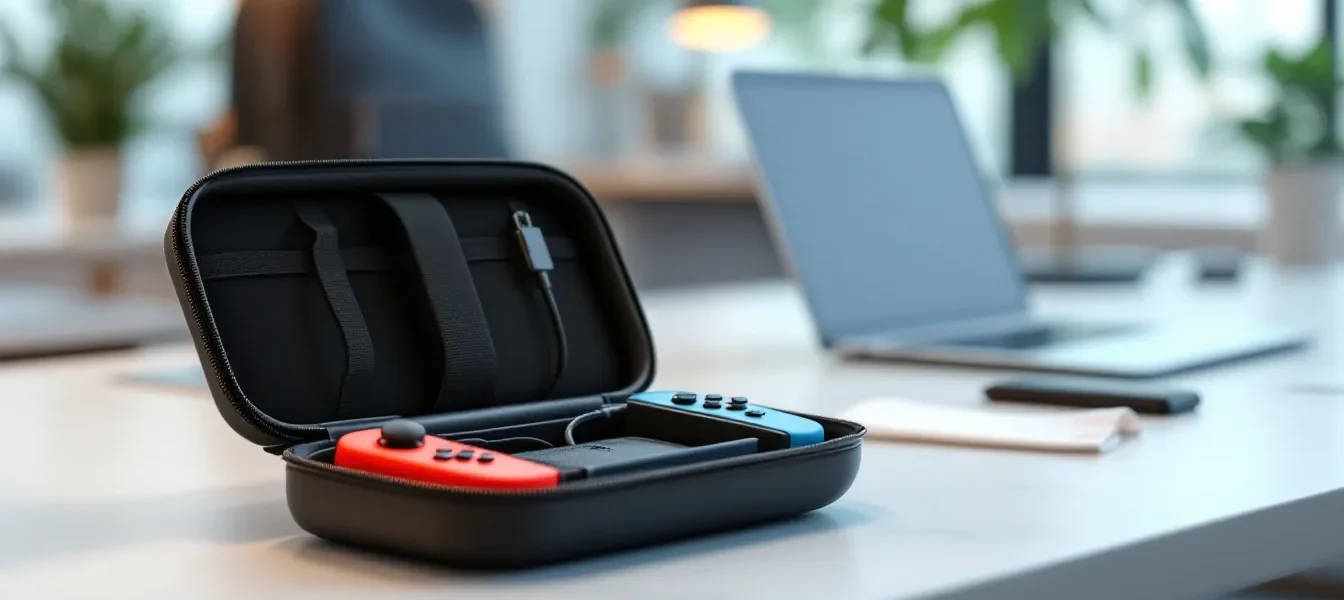
Hard shell cases dominate for good reason: they use EVA (ethylene-vinyl acetate) foam or polycarbonate exteriors that resist crushing forces. When your backpack gets tossed around or something heavy lands on top, that rigid shell distributes impact instead of transferring it to your console.
Inside, look for soft microfiber or velvet linings that won’t scratch the screen or back panel. Elastic retention straps keep the Switch from bouncing around inside the case, a critical detail that cheaper manufacturers skip.
Zipper quality matters more than you’d expect. YKK zippers (the industry standard) rarely fail, while generic zippers can snag, stick, or break after a few dozen uses. Check reviews for zipper complaints before buying.
Portability and Size Considerations
A case that’s too bulky defeats the purpose. Most hard shell cases measure roughly 10″ x 5″ x 2.5″, which fits easily into backpacks or carry-ons without hogging space. Slim cases sacrifice some accessory storage to hit 1-1.5 inches thick, perfect if you’re traveling ultralight.
Weight ranges from 6-12 ounces for most cases. It’s not huge, but if you’re already hauling a laptop, tablet, and other gear, those ounces add up.
Handle or carrying strap? Personal preference, but a wrist strap or carry handle makes it easier to grab-and-go without digging through a larger bag.
Hard Shell vs. Soft Shell Cases: Which Is Right for You?
This isn’t really a contest for travel, hard shell wins for protection, period. But there are legitimate reasons to consider soft cases.
Hard shell cases use rigid exteriors (usually EVA or polycarbonate) that resist impact, pressure, and crushing. Drop one from table height? The case takes the hit, not your console. Stack luggage on top? The shell holds its shape. For flights, road trips, or any scenario where your Switch shares space with other items, hard shells are the safe bet.
The trade-off is bulk. Hard cases don’t compress, so they occupy the same space whether your bag is packed tight or loose. They also tend to cost $20-$50 depending on brand and features.
Soft shell cases (usually neoprene or canvas) offer minimal protection, they’ll guard against scratches and minor bumps, but that’s it. Drop your bag? Hope nothing landed on the Switch. They do excel at one thing: fitting into tight spaces. Soft cases compress, making them ideal if you’re squeezing into an already-packed backpack.
Soft cases run cheaper ($10-$25) and weigh less, but most experienced travelers consider them false economy. The first time your bag gets rough-handled, you’ll wish you’d spent the extra $15 on a hard shell.
Verdict: Unless you’re exclusively carrying your Switch in a dedicated pocket with zero risk of impact, go hard shell. The peace of mind is worth the minor size increase.
Top Nintendo Switch Travel Cases Reviewed
Let’s cut through the noise and focus on cases that actually deliver in 2026.
Best Overall Protection
The Tomtoc Ultra Slim Case remains a top pick three years running. Its hard EVA shell features reinforced corners, the most vulnerable impact points, and a soft microfiber lining that treats your screen like royalty. Interior organization includes 10 game card slots and a large mesh pocket that fits Joy-Con straps, cleaning cloths, and a USB-C cable without strain.
What sets it apart: the CornerArmor technology uses thicker padding at impact zones, and the semi-rigid interior cradle prevents the Switch from shifting during transit. It’s also one of the few cases that feels premium without the $50 price tag, usually sits around $25-$30.
Compatible with both original Switch and OLED models (check specific version when ordering).
Best Budget-Friendly Option
The AmazonBasics Carrying Case proves you don’t need to spend big for solid protection. At $15-$18, it delivers a hard EVA exterior, 8 game card slots, and enough room for a charging cable. The zipper feels slightly cheaper than premium options, but multiple gaming accessories review sites have confirmed it holds up through regular travel.
It won’t win design awards, the aesthetic is pure utilitarian black, but if your priority is “keep my Switch safe without very costly,” this does the job. Just don’t expect luxury touches like carry handles or extra accessory pockets.
Best for Long Trips and Extra Accessories
For travelers bringing the full setup, the Satisfye Elite Pro Case earns its $50 price tag. This thing is massive compared to standard cases, with room for the Switch, Pro Controller, charging dock, HDMI cable, and multiple accessories. The interior uses customizable foam dividers, you can configure storage based on what you’re actually packing.
20 game card slots sit on one side, while the opposite panel features multiple zippered compartments for cables, adapters, and Joy-Con accessories. The exterior handle makes it easy to carry solo, and the hard shell construction means you could probably use it as a seat (don’t, but you could).
Trade-off: size. This isn’t sliding into a packed backpack, it’s a standalone carry item. But if you’re setting up in hotel rooms or friend’s places for extended sessions, having everything in one organized case is clutch.
Best Slim and Minimalist Design
The Hori Slim Tough Pouch targets gamers who want protection without bulk. At just over 1 inch thick, it’s the slimmest hard case that still offers legitimate protection. The streamlined design eliminates extra pockets, you get 5 game card slots and one thin compartment for a charging cable, that’s it.
Ideal for daily commuters or minimalists who run mostly digital games and don’t need to pack an accessory arsenal. The slim profile fits easily into laptop bags, gym bags, or even large jacket pockets.
Runs about $20-$25. Available in multiple colors beyond basic black, which is a nice touch if you care about aesthetics.
Travel Cases for Nintendo Switch OLED: What’s Different?
The Switch OLED’s larger 7-inch screen and slightly different dimensions (102mm x 242mm x 13.9mm vs. the original’s 102mm x 239mm x 13.9mm) mean not every case fits perfectly. Those extra 3mm of height matter more than you’d think.
Most cases manufactured from 2022 onward explicitly state OLED compatibility, but older cases designed for the original Switch can create problems. The OLED might fit, but the elastic retention straps sit in slightly wrong positions, or the case doesn’t close as snugly, allowing movement during transit.
The OLED’s screen also uses a different material, it’s more scratch-resistant than the original’s plastic screen, but it’s not invincible. Cases with microfiber or velvet linings remain the safest choice.
Many manufacturers now offer separate SKUs for original Switch and OLED models, so pay attention when ordering. If a case just says “for Nintendo Switch” without specifying OLED compatibility, check the dimensions or read reviews from OLED owners before buying.
The good news: premium cases like the Tomtoc and Satisfye lines offer dedicated OLED versions that account for the size difference and provide perfect fits. Don’t try to force an OLED into an old case “because it’s close enough”, that’s how screens crack.
How to Pack Your Nintendo Switch for Travel Like a Pro
Having a good case is step one. Packing it correctly is step two, and plenty of people skip this.
Organizing Cables, Chargers, and Accessories
Cable management prevents the rat’s nest situation where you’re untangling charging cables for five minutes before you can play. Use the case’s built-in cable management, most have elastic loops or zippered pockets designed to keep cables coiled and separated.
For charging bricks and adapters, wrap cables around them before securing with a velcro tie or rubber band. This keeps everything compact and prevents cables from snagging on zippers or rubbing against your console.
If you’re bringing a Pro Controller, store it in a separate compartment or use a controller-specific case. Throwing it loose into your main backpack risks bumping the analog sticks or triggers, and according to gaming tech troubleshooting guides, stick drift from repeated impact is a real concern.
Game cards go in the designated slots, don’t just toss them loose in a pocket. Those things are easy to lose, and replacing physical games is expensive. If your case doesn’t have enough slots, consider a separate game card holder rather than improvising.
Protecting Your Screen During Transit
Even with a case, add a tempered glass screen protector if you haven’t already. They’re $8-$12 for a two-pack and absorb impacts that would otherwise crack the actual screen. Installation takes five minutes and dramatically improves durability.
When placing the Switch in its case, make sure the screen faces the padded side, most cases are designed with this in mind, but double-check. The goal is maximum padding between the screen and the case’s exterior.
If you’re packing the case into a larger bag, position it away from hard objects like laptops, water bottles, or camera gear. Ideally, place it in a dedicated electronics compartment where it won’t shift around or collide with other items during transit.
For flights, keep your Switch case in your personal item or carry-on, never check it in luggage. Baggage handlers aren’t gentle, and checked bags experience impacts that even hard shell cases might not fully absorb.
Common Mistakes to Avoid When Choosing a Travel Case
Buyers make the same errors repeatedly. Here’s what to avoid.
Prioritizing looks over protection. That sleek leather case looks great, but if it doesn’t have a hard shell and padding, it’s decoration, not protection. Function first, aesthetics second.
Ignoring game card capacity. If you own 15 physical games and buy a case with 5 slots, you’re going to regret it immediately. Count your cartridges before shopping.
Assuming all cases fit all Switch models. Original Switch, Switch Lite, and Switch OLED have different dimensions. Verify compatibility before ordering, especially if buying from third-party sellers.
Buying cases without reading recent reviews. Manufacturing quality shifts over time. A case that was great in 2023 might use cheaper materials now. Check reviews from the last 3-6 months to confirm current quality.
Choosing cases with no accessory storage for long trips. If you’re traveling for a week and need to bring chargers, cables, and extra controllers, that minimalist case won’t cut it. Match storage capacity to your actual needs.
Skipping zipper quality checks. Cheap zippers fail, often at the worst times (like mid-flight). If reviews mention zipper problems, move on to another option.
Over-packing your case. Just because it zips doesn’t mean you should force it. Over-stuffed cases put pressure on your console and can cause screen damage over time. If you can’t close it easily, you’re carrying too much.
Maintaining and Cleaning Your Nintendo Switch Travel Case
Cases accumulate dust, crumbs, and grime faster than you’d expect, especially if you’re traveling regularly.
For hard shell exteriors, wipe down with a slightly damp microfiber cloth every few weeks. Avoid harsh cleaners or alcohol-based solutions, they can damage coatings or cause discoloration. For stubborn dirt, a mild soap solution works fine: just make sure to dry thoroughly before storing your Switch inside.
Interior cleaning requires more care. Remove your Switch and all accessories, then use a lint roller or soft brush to remove dust and debris from fabric linings and elastic straps. For cases with removable interior padding, some can be gently hand-washed and air-dried, but check manufacturer guidelines first.
Zippers need occasional maintenance too. If they start sticking, run a graphite pencil along the teeth (yes, really, the graphite acts as a lubricant). Don’t use oil or WD-40, as those can attract dirt and damage interior fabrics.
Inspect your case every few months for wear indicators: fraying elastic straps, cracked shell corners, or failing zippers. According to product longevity data from tech accessory reviewers, most quality cases last 2-3 years with regular travel use before showing significant wear.
Store your case in a cool, dry place when not in use. Avoid leaving it in hot cars or direct sunlight for extended periods, heat can warp hard shells and degrade adhesives that hold interior components in place.
If your case develops an odor (hey, it happens), sprinkle baking soda inside, let it sit overnight, then vacuum out. For persistent smells, fabric refresher sprays work, but let the case air out completely before putting your Switch back inside.
Conclusion
The right travel case transforms your Switch from a fragile piece of electronics into a genuinely portable gaming system. Whether you’re commuting across town or flying overseas, that $20-$50 investment buys peace of mind and protects a $300-$350 console from the chaos of real-world travel.
Hard shell cases with proper padding and smart organization deliver the best value for most gamers. Match storage capacity to your actual gear, verify compatibility with your specific Switch model, and don’t cheap out on quality, good zippers and solid construction separate cases that last years from ones that fail after months.
Pack smart, maintain your case, and your Switch will survive thousands of miles of adventures without a scratch. Now get out there and game wherever the road takes you.